
Занимательные статьи
-
-
-
Seochon for Artistic Vibes, Bukchon for Timeless Tradition – Two Seoul Neighborhoods: Similar Yet Distinct
-
04/22/2025
-
20.3K
5
7
-
-
Bukchon
Korea_Tourism
Seoul_Tour
Seoul
Seochon
-
-
-
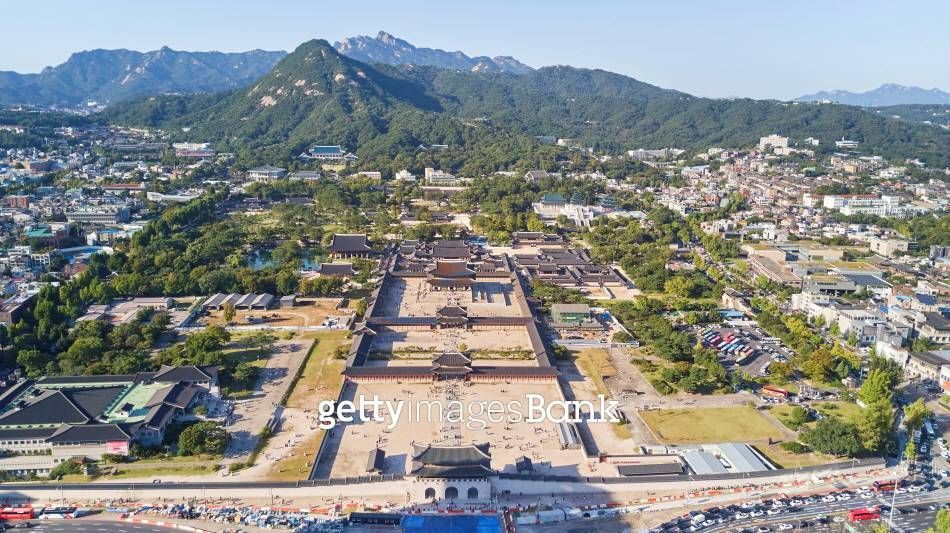
To the west of Gyeongbokgung Palace lies Seochon (West Village), and to the north, Bukchon (North Village). These two neighborhoods preserve the old soul of Seoul, offering a glimpse into the city’s rich history. But their charm doesn’t end with the past. In these areas, traditional hanok houses blend seamlessly with modern life and culture. Stylish cafés, independent bookstores, and art galleries, tucked away in quiet alleyways, reflect a contemporary lifestyle deeply rooted in tradition. The low-slung rooftops of hanok homes, framed by the surrounding mountains, create a serene landscape—one that sets these neighborhoods apart from Seoul’s high-rise-filled districts. Seochon and Bukchon are must-visit destinations for anyone traveling to the city. Read on to discover the hidden charms of each neighborhood.
| Seochon, Where Art Breathes
Seochon has long been a haven for artists seeking inspiration. From the Joseon dynasty to the modern era, countless poets, novelists, and painters have lived and created here — and that artistic spirit still thrives today. Tucked away in its alleys are small galleries, independent bookstores, and creative cultural spaces that preserve the neighborhood’s unique artistic atmosphere. Blending the humble charm of everyday local life, literary corners rich in emotion, and the quiet beauty of Inwangsan Mountain's foothills, Seochon is the perfect destination for travelers seeking a more soulful side of Seoul.
Charm #1: Local – Where Everyday Life Unfolds in the Alleys
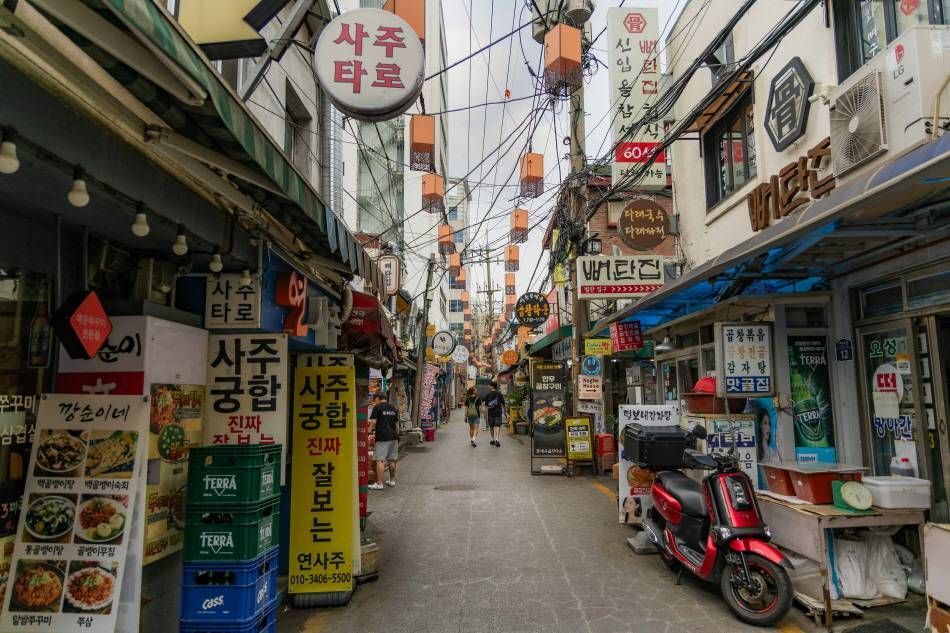
Sejong Village Food Street ⓒKorea Tourism Organization Photo Korea, photo by Ahn Yeong-gwan
-
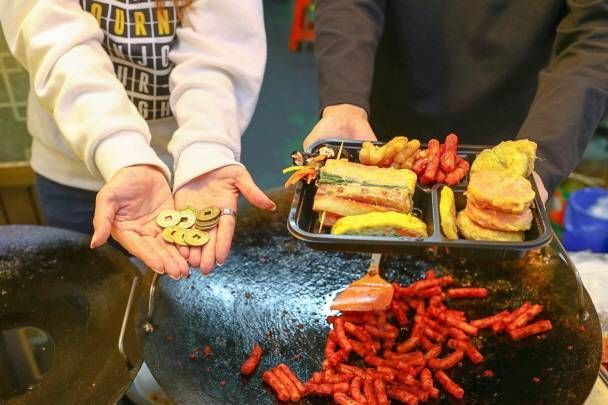
Yeopjeon Lunchbox at Tongin Market ⓒKorea Tourism Organization Photo Korea
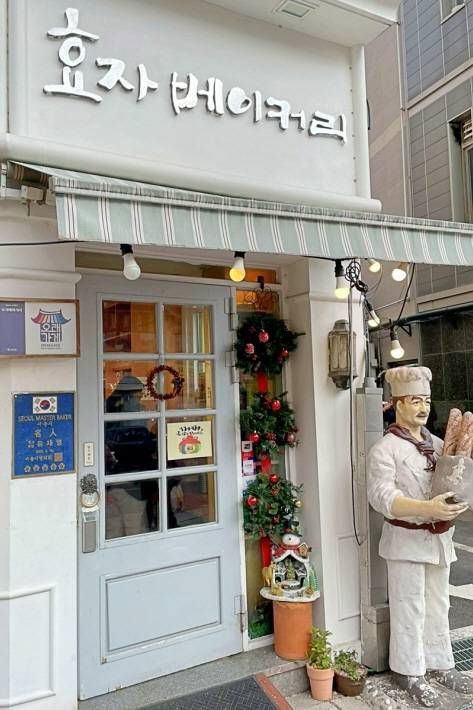
My Pictures Hyoja Bakery ⓒNaver Blog Makipman (virus880)
Located in the heart of Seoul, Seochon is a neighborhood where older residential areas and small-scale commercial spaces blend in harmony. Instead of high-rise buildings, the area features low-rise homes, traditional hanok houses, and cozy local shops offering visitors a close-up look at Seoul's historic village landscape. Rather than global franchises, Seochon is anchored by long-standing bakeries, family-run eateries, and traditional markets that preserve the vibrant spirit of the local community.
■ Recommended Spots
- [Sejong Village Food Street] This vibrant street is home to everything from long-time local favorites to trendy new restaurants. It’s a great place to try everyday Korean dishes beloved by locals, such as dwaejigalbi (grilled spareribs), kimchi jjigae (kimchi stew), bibimbap, and samgyeopsal (grilled pork belly).
- [Tongin Market] A traditional market located in the heart of Seochon, best known for its unique “Yeopjeon Dosirak” lunchbox, which you can assemble using traditional coin-shaped tokens. It’s also a great place to sample popular Korean street food like oil-fried tteokbokki, tteok kkochi (rice cake skewers), and gimbap.
- [Hyoja Bakery] A retro-style bakery that’s been serving locals since the 1980s. Its signature item is Corn Bread, a soft, moist loaf filled with sweet corn known for its rich, nutty flavor.
Charm #2: Literature – Follow in the Footsteps of Literary Figures
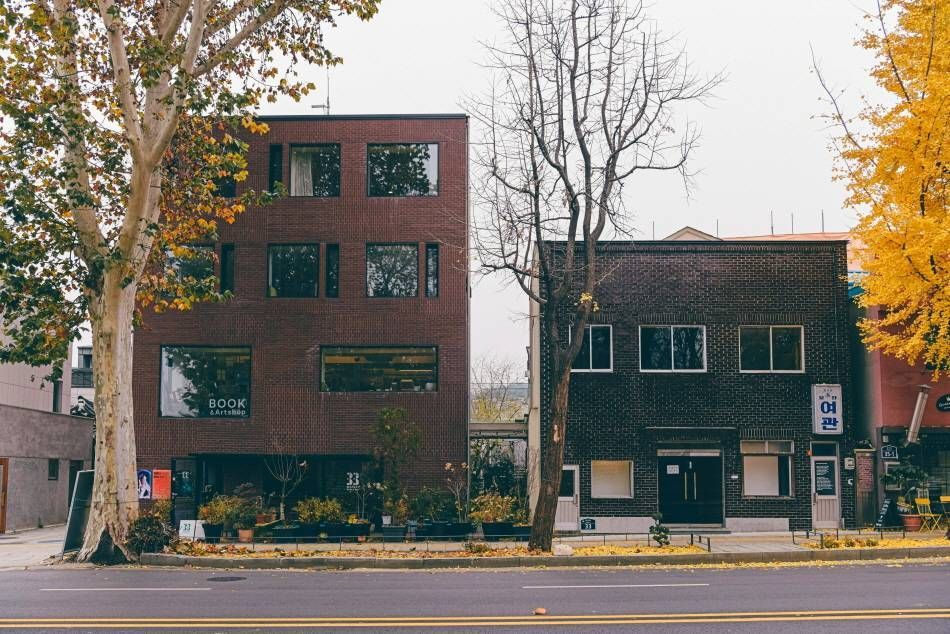
Artspace Boan 1942 ⓒDANIM Han Sang-ryeol
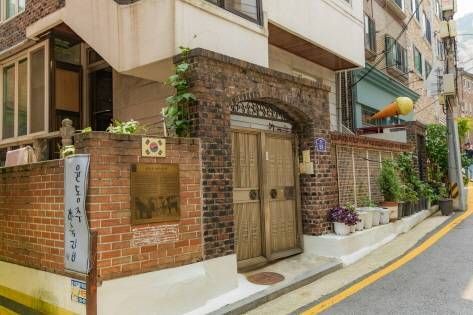
Yi Sang’s House / Site of Yun Dong-ju’s Boarding House ⓒKorea Tourism Organization Photo Korea, photo by Ahn Yeong-gwan
Seochon's proximity to Gyeongbokgung Palace, the main royal palace of the Joseon dynasty, made it a favored residential area for government officials, scholars, and middle-class intellectuals who served at the court. In the early 1900s, as Seochon developed a more liberal and tranquil atmosphere than the traditionally conservative Bukchon area, it gradually became a haven for writers and artists. Today, as you stroll through the streets of Seochon, you’ll naturally come across places where these literary figures once lived, offering quiet glimpses into the artistic worlds they left behind.
■ Recommended Spots
- [Boan1942] Originally built in 1936, this former inn was once a cultural gathering place for writers and artists. Today, the historic building has been thoughtfully transformed into a multi-purpose cultural space featuring a guesthouse, café, bookstore, and exhibition halls.
- [Yi Sang’s House] Yi Sang, often referred to as a “literary genius,” is one of the most iconic figures in modern Korean literature, known for both his poetry and prose. The hanok house where he once lived has been preserved and now serves as an exhibition space offering insight into his life and literary legacy.
- [The Site of Yun Dong-ju’s Boarding House] Yun Dong-ju is one of Korea’s most beloved poets, renowned for writing verses of hope and resistance during the Japanese colonial era. The site of the boarding house where he stayed during his university years has been preserved, offering a quiet glimpse into his enduring spirit and literary legacy.
Charm #3: Nature – A Peaceful Escape in the City’s Heart
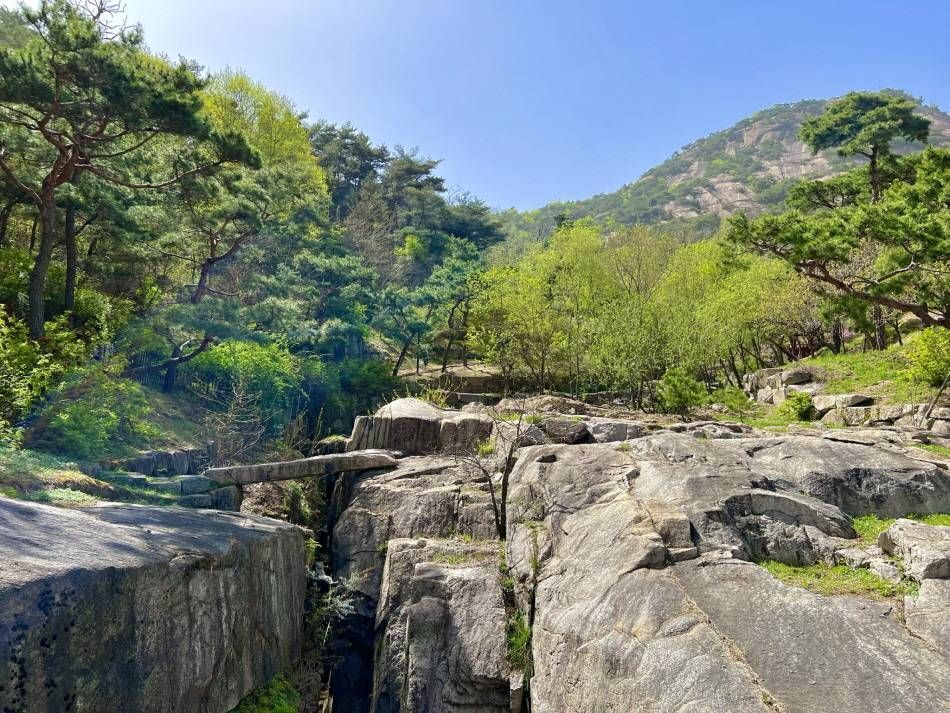
Suseongdonggyegok Valley ⓒTravel Leader Lee Soo-jeong
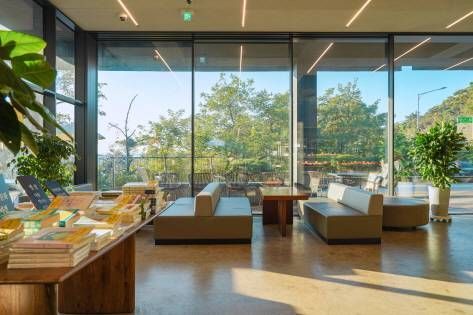
Chosochaekbang Book Café ⓒDANIM Kim Eun-jin
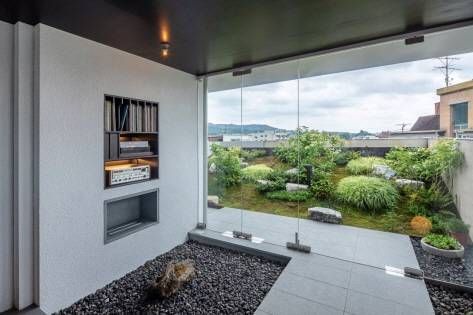
Daechung Park, Inwangsan Mountain ⓒDaechung Park
One of Seochon’s greatest charms is its easy access to nature, despite being located in the heart of the city. Just a short walk up the slopes of Inwangsan Mountain takes you away from the urban noise and into a serene landscape of trees, rocky outcrops, and tranquil valleys. For centuries, Inwangsan has served as a wellspring of inspiration for artists. The renowned Joseon-era painter Jeong Seon captured the mountain’s beauty in his masterpiece “Inwang Jesaekdo” (After Rain at Inwangsan Mountain), while poets of the time wrote verses inspired by the natural scenery unfolding beneath its slopes. Even today, a walk along the Inwangsan Trail offers a peaceful break from the rush of daily life.
■ Recommended Spots
- [Suseongdonggyegok Valley] A signature valley nestled in central Seoul, this scenic spot features cool streams flowing between towering rock formations. Its proximity to the royal palace made it a favored retreat for royals and noble scholars in the past.
- [The Forest Chosochaekbang] A book café remodeled from a former police outpost on the slopes of Inwangsan Mountain. With sweeping views that include Namsan Tower, it’s the perfect spot to unwind or enjoy a quiet read in a serene setting.
- [Daechung Park] A café and bar offering panoramic views of Inwangsan Mountain and the tiled rooftops of traditional hanok houses. Its stylish interior and cozy atmosphere make it a standout destination.
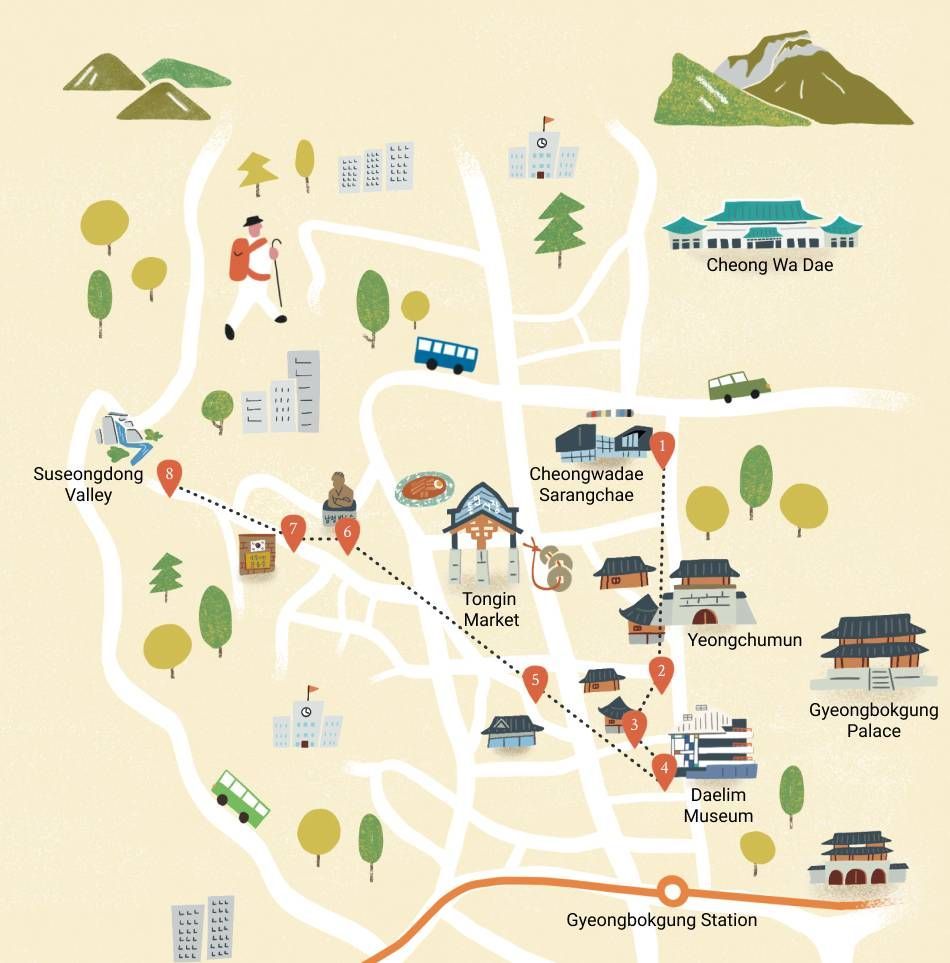
📌 How About This? A Seochon Walking Tour Recommended by the Cheongwadae Sarangchae
ⓒCheongwadae Sarangchae
✅ Time required: Approx. 2 hours (2.1 km)
✅ Route overview
- ① Cheongwadae Sarangchae
- An exhibition hall offering insights into travel in Korea
- ② Boan1942
- A multi-purpose cultural space remodeled from an old inn
- ③ Ground Seesaw Seochon
- A cultural complex that brings together art and everyday culture
- ④ Daelim Changgo
- A contemporary art gallery showcasing exhibitions that cross genres and styles
↓
- ⑧ Suseongdonggyegok Valley
- A scenic valley nestled in the city
- ⑦ Yun Dong-ju’s Boarding House Site
- The site of the boarding house where poet Yun Dong-ju once stayed
- ⑥ Park No-soo Art Museum
- A museum dedicated to the works of modern Korean painter Park No-soo
- ⑤ Yi Sang’s House
- A literary exhibition space honoring the life and works of poet Yi Sang
- ⑤ Yi Sang’s House
- A literary exhibition space honoring the life and works of poet Yi Sang
- ⑥ Park No-soo Art Museum
- A museum dedicated to the works of modern Korean painter Park No-soo
- ⑦ Yun Dong-ju’s Boarding House Site
- The site of the boarding house where poet Yun Dong-ju once stayed
- ⑧ Suseongdonggyegok Valley
- A scenic valley nestled in the city
| Bukchon, Where Tradition Lives On
Bukchon has long been a prestigious residential area, once home to aristocrats and noble families. Even today, it's a living neighborhood where tradition is not just remembered but is part of everyday life. From the iconic Bukchon Hanok Village, filled with traditional Korean houses, stylish modern art spaces, Bukchon showcases the beauty of Korean architecture in all its diversity. With timeless hanok, inspiring galleries, and refined local cuisine, Bukchon is a perfect destination for travelers looking to immerse themselves in authentic Korean culture.
Charm #1. Tradition – The Unique Beauty of Hanok
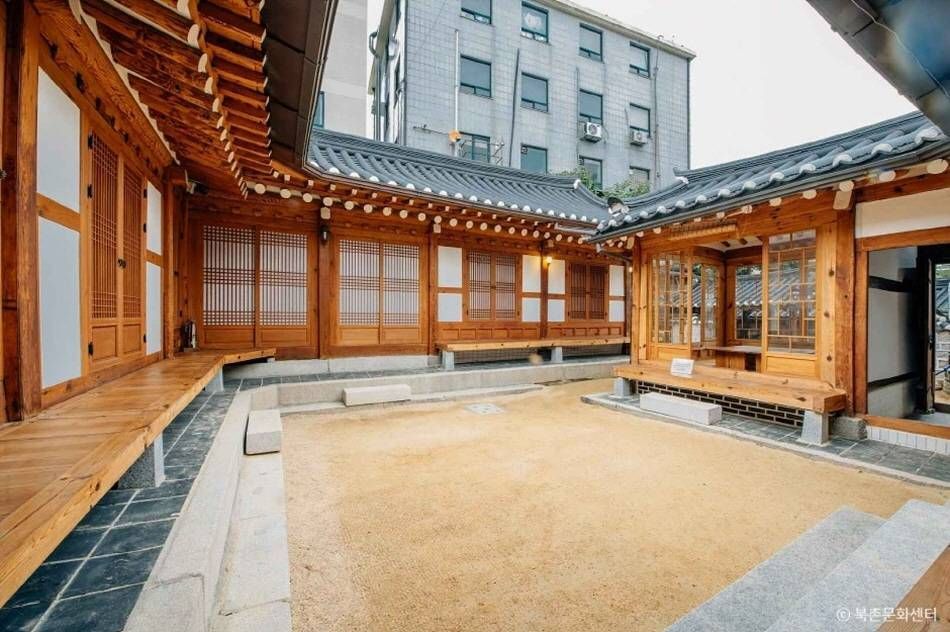
Bukchon Cultural Center ⓒBukchon Cultural Center
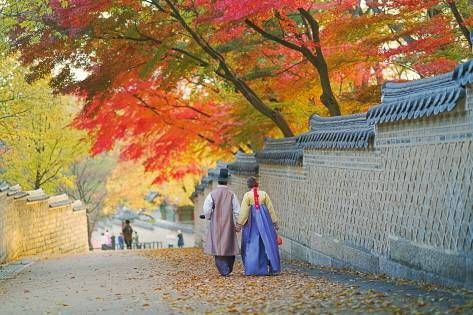
Changdeokgung Palace Stonewall Road ⓒClip Art Korea
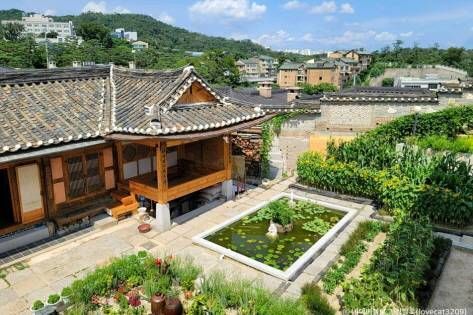
Bukchon Asian Cultural Art Museum ⓒNaver Blog Kim Bal-rok (lovecat3209)
What makes Bukchon’s hanok houses so special is that they’re still very much alive—with real people living in them today. Most of these homes follow the "urban hanok" style, featuring tall walls and large gates that shield the interior from outside view. As a result, the streets of Bukchon often feel like narrow paths running alongside a continuous city wall. The reason so many hanok houses have been preserved here is thanks to the Bukchon Preservation Project launched by the Seoul Metropolitan Government in 2001. Rather than simply restoring the buildings' exteriors, the project focused on improving the actual living environment—helping tradition and everyday life blend naturally, just as they do today.
■ Recommended Spots
- [Bukchon Cultural Center] A public cultural space dedicated to introducing the architectural structure and lifestyle of traditional hanok in Bukchon. In addition to its permanent exhibition detailing Bukchon’s 600-year history, the center also offers English-language programs that provide guided insights into hanok culture. (Make a reservation here)
- [Changdeokgung Palace Stonewall Road] A peaceful stone wall path that runs along the outer walls of Changdeokgung Palace. In its tranquil atmosphere, long stone walls and alleys lined with hanok create a perfect setting for a relaxing walk while appreciating the beauty of traditional Korean architecture.
- [Bukchon Asian Cultural Art Museum] A museum showcasing traditional crafts from Korea and East Asia. Located at the highest point of Bukchon Hanok Village, it offers panoramic views of hanok roofs, Inwangsan Mountain, and Gyeongbokgung Palace.
Charm #2. Art – Exhibitions that Inspire Artistic Appreciation
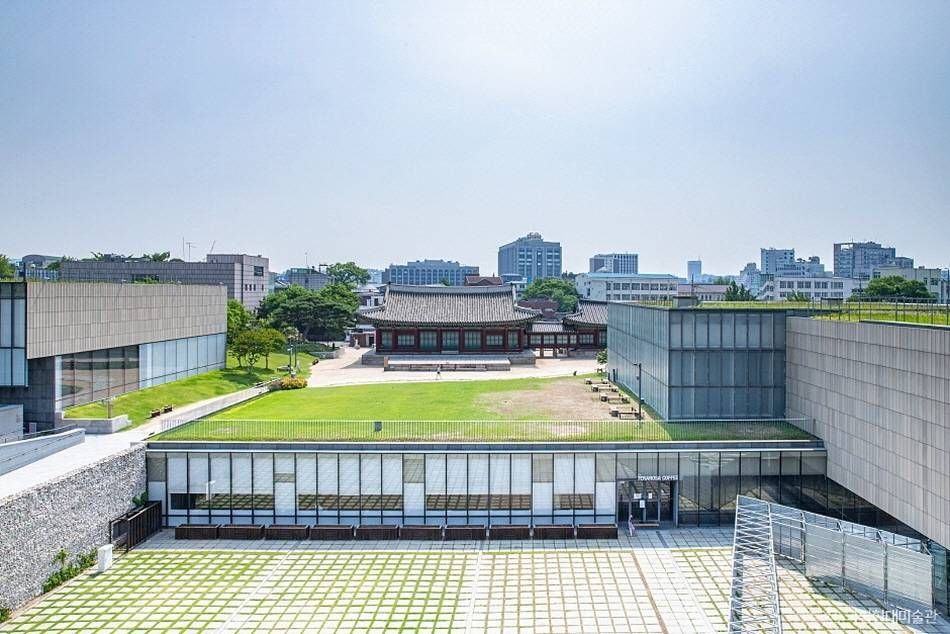
National Museum of Modern and Contemporary Art ⓒNational Museum of Modern and Contemporary Art
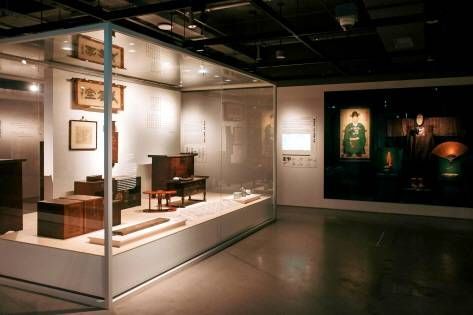
Seoul Museum of Craft Art ⓒDANIM Kim Ki-ppeum
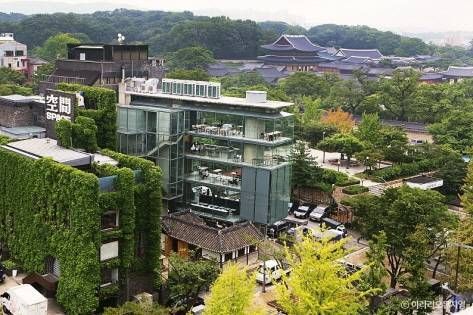
Arario Museum in Space ⓒArario Museum
Bukchon is not only famous for its hanok houses. Thanks to its quiet and serene ambience, it's also a wonderful place to appreciate art. Perhaps that's why you'll find many galleries and exhibition spaces housed in old hanok or modernized historic buildings. The unique details of hanok, such as tiled roofs, wooden pillars, and hanji (traditional Korean paper) windows, blend harmoniously with contemporary art, making the entire space feel like a work of art in itself.
■ Recommended Spots
- [National Museum of Modern and Contemporary Art, Seoul] As Korea's leading national art museum, it hosts exhibitions centered on contemporary and modern art. Located between Bukchon Villlage and Gyeongbokgung Palace, it’s an ideal place to visit after exploring the hanok village and historic palace—offering a refreshing contrast with its showcase of modern works.
- [Seoul Museum of Craft Art] Korea's first public museum dedicated to crafts. The museum primarily features exhibitions highlighting Korea's representative craftworks, including ceramics, textiles, and najeon chilgi (mother-of-pearl inlay lacquerware). It also offers interactive spaces for hand-on experiences.
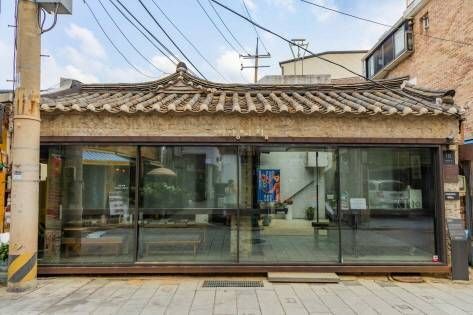
- [Arario Museum in Space] A private contemporary art museum remodeled from a former architectural office. Its unique exterior, featuring a blend of various architectural components such as brick, full-length glass, and hanok elements, makes a striking impression.
Charm #3. Taste – Savor Korean Traditional Cuisine Suit Every Palate
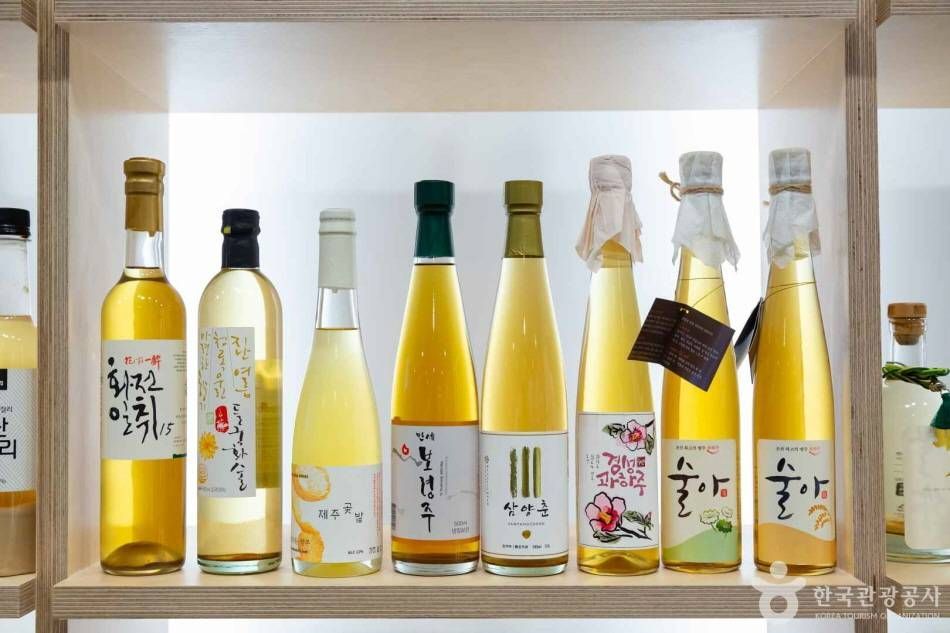
The Sool Gallery
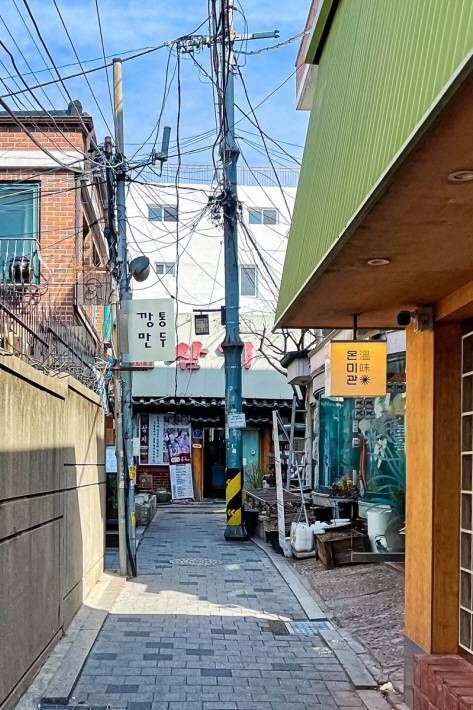
Jaedong Alley ⓒNaver Blog O Ri (sj330035)
-
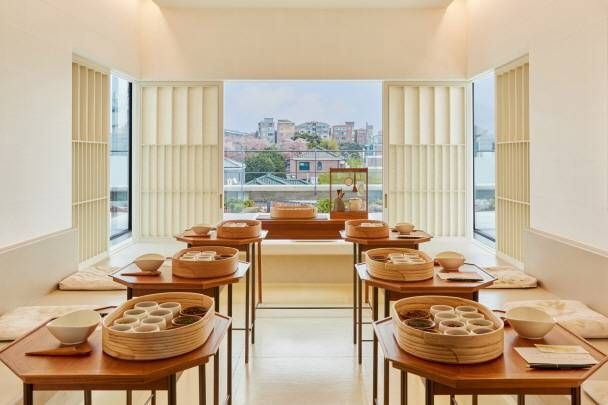
Osulloc Tea House ⓒOsulloc
A stroll through Bukchon will lead you to charming little restaurants and cafés nestled between traditional hanok houses. The area's vibrant food culture blends naturally with the lively ambience of the neighborhood, creating a warm and inviting charm. Every alley is dotted with culinary gems—from classic Korean dishes to traditional liquors and desserts—so you can enjoy flavors tailored to your taste. Savor a hearty bowl of hand-pulled noodles at a hanok restaurant, then unwind with a cup of tea at a traditional teahouse overlooking a serene courtyard—an experience unique to Bukchon.
■ Recommended Spots
- [The Sool Gallery] A space dedicated to showcasing and promoting traditional liquors crafted at breweries across Korea. It also offers free tasting sessions where visitors can sample a variety of drinks, available in English as well.
- [Jaedong Alley] Located between Exits 2 and 3 of Anguk Station, this alley lined with hanok houses is home to a number of cozy Korean restaurants known for their home-style flavors. Here, you can enjoy classic dishes such as handmade dumplings, kalguksu (noodle soup), and kimchi jjigae.
- [Osulloc Tea House Bukchon] The Bukchon branch of Osulloc, one of Korea’s leading tea brands. Set in a renovated hanok, this tea house serves traditional teas alongside beautifully crafted tea-based desserts.
📌 How About This? A Bukchon Walking Tour Recommended by the Cheongwadae Sarangchae
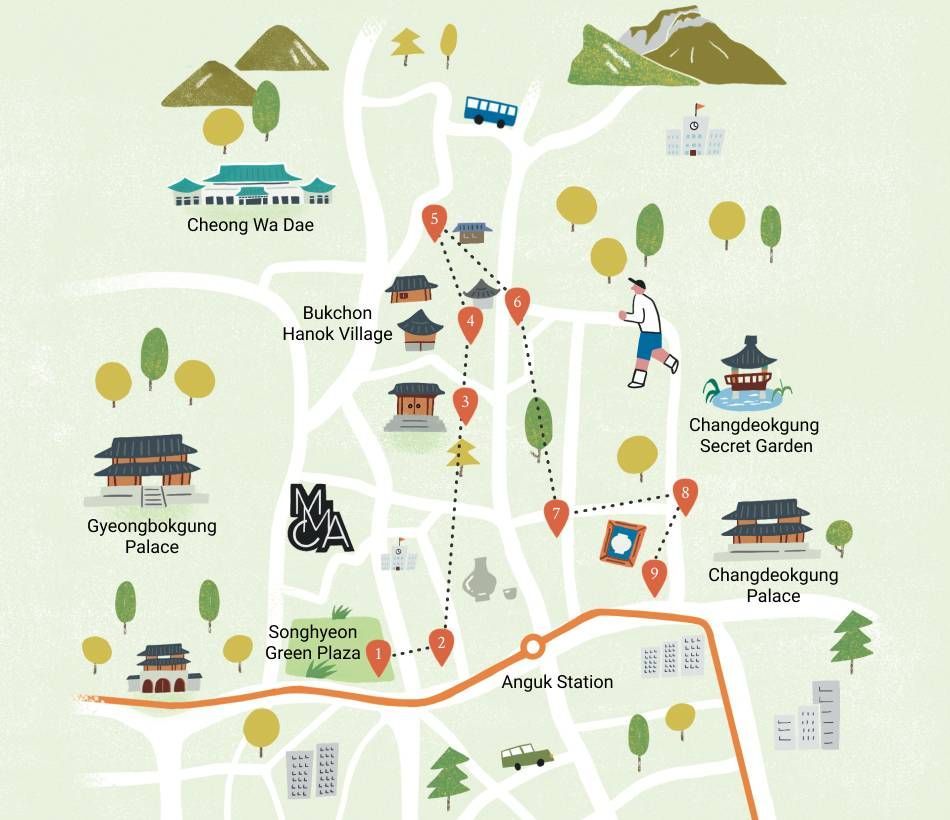
ⓒCheongwadae Sarangchae
✅ Time Required: Approx. 2 hours 30 minutes (3.2 km)
✅ Route Overview
- ① Songhyeon Green Plaza
- A tranquil retreat where wildflowers bloom alongside open grassy lawns
- ② Seoul Museum of Craft Art
- A craft art museum showcasing a diverse collection of traditional and contemporary works
- ③ Baek In-je’s House
- A traditional hanok that has embraced modernity over its 100-year history
- ④ Futura Seoul
- A spacious 1,157m2 media art exhibition hall designed for large-scale immersive experiences
↓
- ⑧ Changdeokgung Palace Stonewall Road
- A tranquil stone wall path along Changdeokgung Palace
- ⑦ Bukchon Cultural Center
- A venue offering in-depth insights into hanok
- ⑥ Bukchon Hanok Hall
- A public hanok where you can leisurely enjoy a variety of exhibitions
- ⑤ 31 Gahoe-dong
- A viewpoint offering a panoramic view of Bukchon Hanok Village
↓
- ⑨ Arario Museum in Space
- A private art museum housed in a red-brick building, showcasing contemporary art
- ⑤ 31 Gahoe-dong
- A viewpoint offering a panoramic view of Bukchon Hanok Village
- ⑥ Bukchon Hanok Hall
- A public hanok where you can leisurely enjoy a variety of exhibitions
- ⑦ Bukchon Cultural Center
- A venue offering in-depth insights into hanok
- ⑧ Changdeokgung Palace Stonewall Road
- A tranquil stone wall path along Changdeokgung Palace
- ⑨ Arario Museum in Space
- A private art museum housed in a red-brick building, showcasing contemporary art
⭐ Discover more travel routes in Taking a Stroll in Seochon and Bukchon – 2025 Edition, published by Cheongwadae Sarangchae!
- 1330 Korea Travel Helpline: +82-2-1330
- 1330 Text Chat: https://m.site.naver.com/1rEid
- (Korean, English, Japanese, Chinese, Russian, Vietnamese, Thai, and Indonesian)
*This column was last updated in April 2025, and therefore information may differ from what is presented here. We advise you to check for updates before visiting.
-

Телефон и чат горячей
линии для туристов 1330

Бесплатный интернет-звонок(бесплатно при подключнии WiFi /
Использование мобильных данных)

Открыть чат горячей линии 1330(Доступно без скачивания)


установлено на вашем устройстве)